
Masterbatch Manufacturing
Unlock the Full Potential of Your Materials
Liquid masterbatch manufacturing is the art and science of pre-dispersing high loadings or concentrations of functional fillers, such as carbon nanotubes (CNTs), graphene, ceramic particles, or pigments, into a carrier matrix. These liquid or solid filler particle concentrates can then be diluted into final product formulations, making the incorporation of the materials easier and more efficient. Typically, masterbatches offer exceptional dispersion, with reduced agglomerates, thus yielding superior performance.
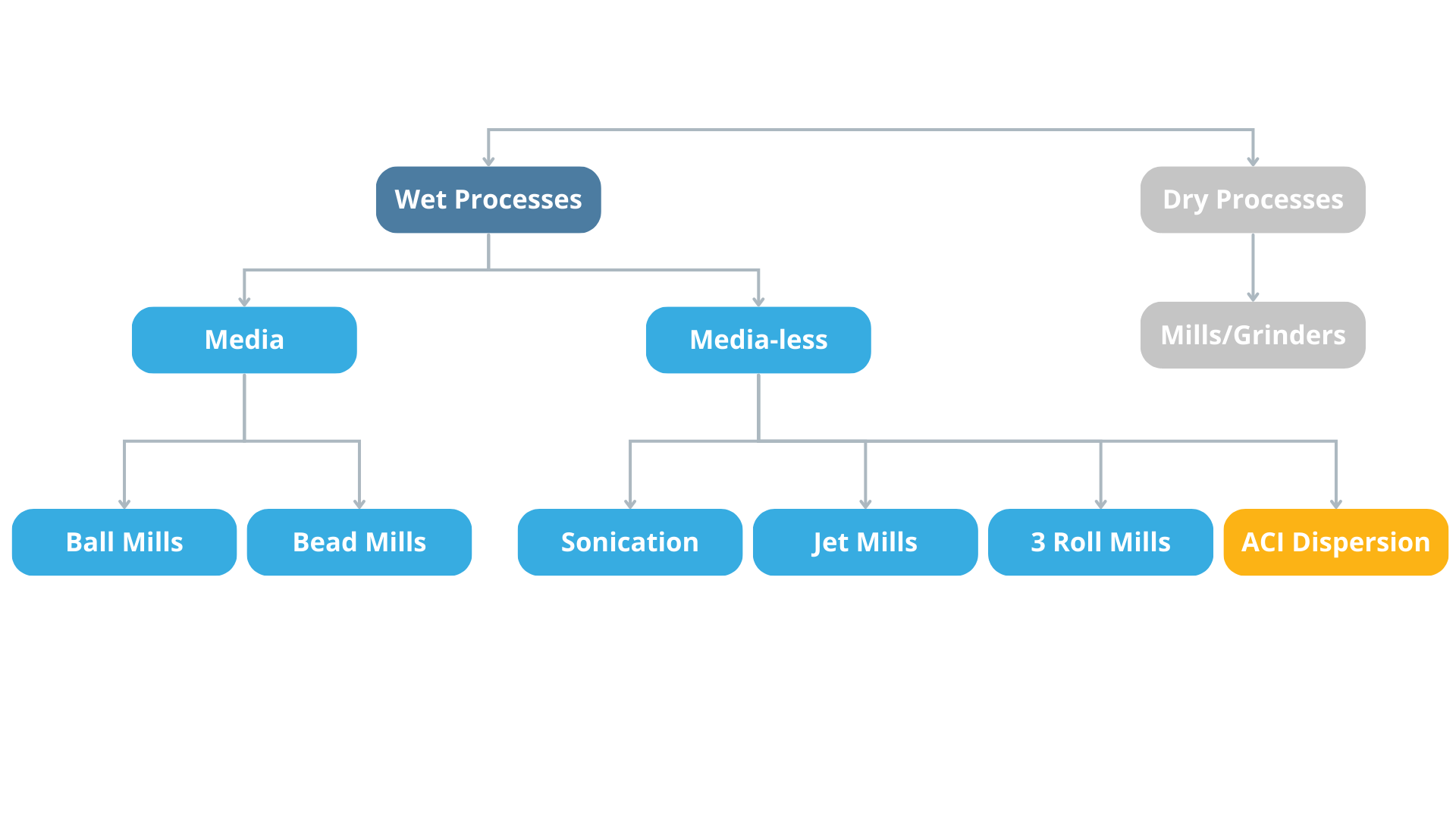
However, not all masterbatches are created equal. Conventional mixing methods often fail when it comes to dispersing submicron and high-aspect-ratio particles, preserving filler morphology, or processing high-viscosity materials.
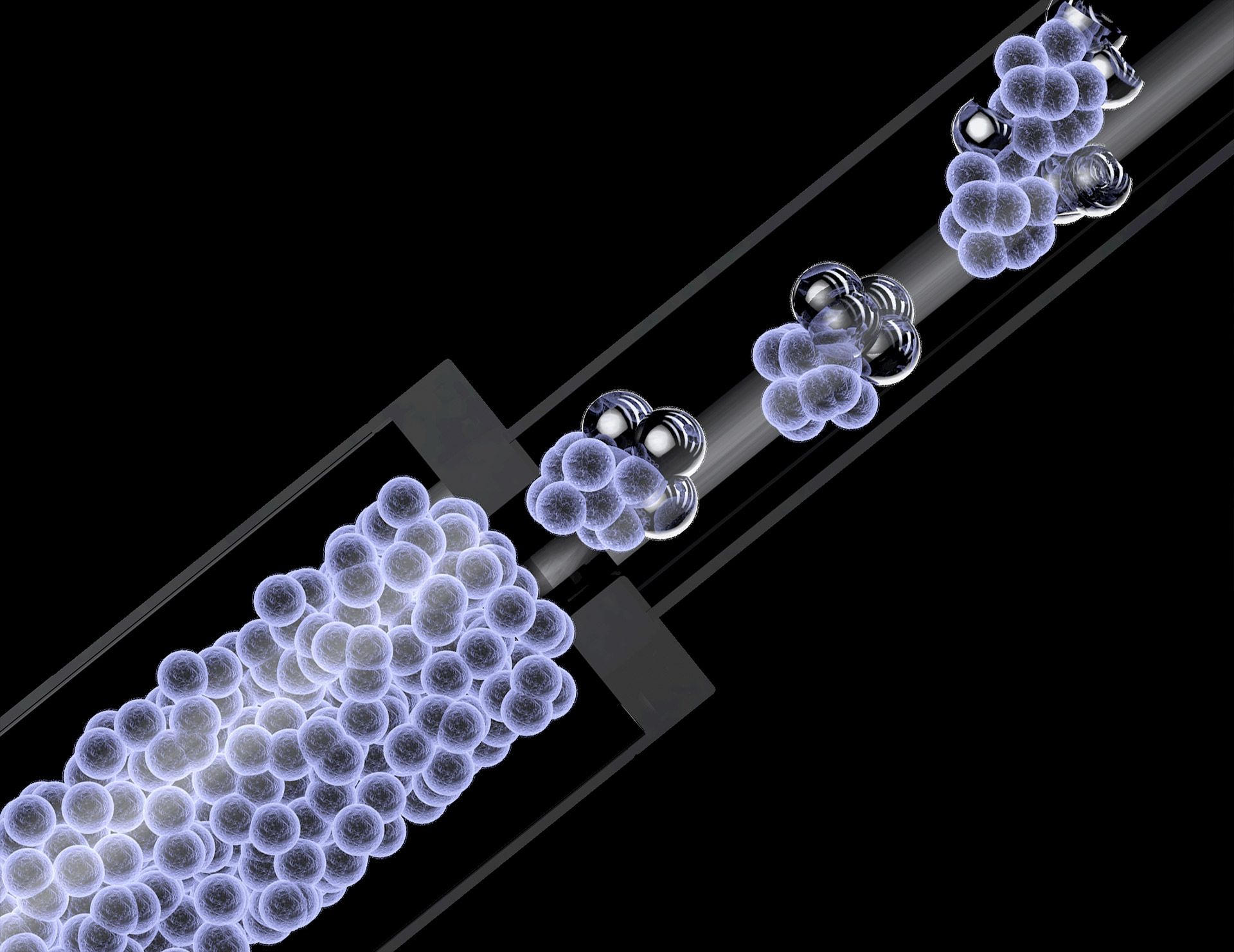
This is where ACI’s proprietary cavitation technology stands apart. Using shear forces generated by the formation and implosive collapse of vapor bubbles at pressures up to 40,000 psi, our media-less dispersion process breaks apart agglomerates while preserving particle morphology, resulting in the uniform dispersion of micron- and sub-micron-sized materials into high viscosity liquid matrices.
Let’s Engineer Better Materials Together
We don’t just supply liquid masterbatches—we partner with manufacturers to solve formulation challenges, improve performance, and accelerate innovation. Whether you’re developing R&D materials or scaling commercial production, ACI Materials can provide custom solutions tailored to your exact needs.
산업 애플리케이션
Our dispersion technology can be used in a variety of industries and applications including:
-
- Batteries
- Low-Loss Printed Circuit Board Laminates
- Thermal Management
- Organic/Inorganic Pigments
- Structural Reinforcement
- Lubricants
- Cosmetics
- And more...

Benefits
- Superior electrical performance
- 더 나은 기계적 성능
- Increased functional filler loading
- Efficient dispersion of agglomerates into primary particles
- Enhanced dielectric loss by increased filler loading and superior dispersion of challenging fillers
- Minimal to no impact on particle morphology
- Capable of processing orders of magnitude higher viscosity liquids than traditional cavitation methods
- Superior performance from high-value fillers
- Uniform (batch-to-batch) consistency
- Improved dispersion stability
ACI 소재의 이점
Homogeneous and effectively dispersed micron and sub-micron particles yield the highest performance materials. Not only is ACI Materials' proprietary cavitation process able to handle higher viscosities and wider particle size range, it is more effective and efficient at dispersing functional fillers.
What is Cavitation?
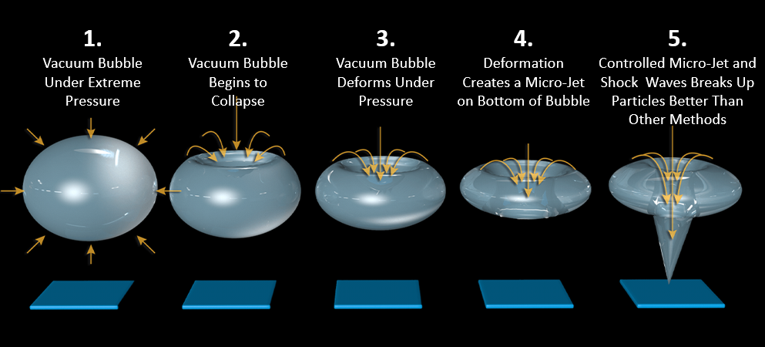
ACI’s Patented Cavitation Dispersion Process effectively and efficiently deagglomerates functional fillers/particles by forming vacuum bubbles in the mixture, which rapidly collapse, producing high energy shock waves and hydro jets, which separate the particles and wet out the surface in an unparalleled manner, yielding a stable mixture. ACI’s process is able to handle a wide variety of viscosities and particle morphologies, while effectively deagglomerating particles into their primary particle size.
Top-Down Mixing Methods:
탄소 나노튜브 - 언번들링 도전 과제
Pre-cavitation mixing samples show large bundles of chords of SWCNT. Chords widths range in the 50-200nm (nominal diameter of individual SWCNT ~2.5nm, so 20-80 tubes wide). Due to the immense surface area of the SWCNT and the Van der Waal attractions, the SWCNT have a propensity to bind together strongly. This makes it very challenging to unbundle the chords, without causing significant damage to the SWCNT aspect ratio.
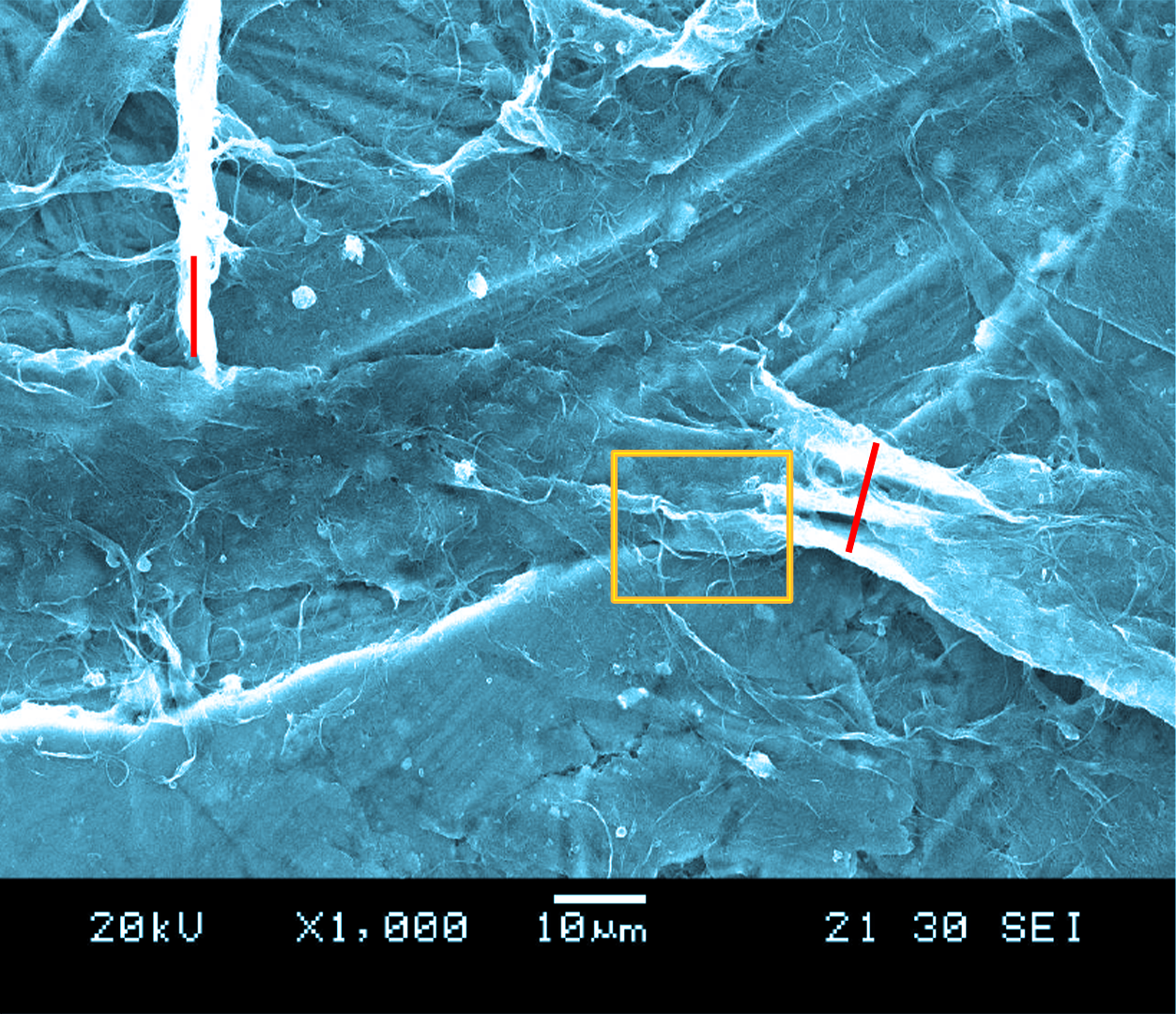
빨간색 막대는 10µm 스케일을 나타내며, 일부 번들은 직경이 10µm보다 크고 길이가 30µm보다 길다는 것을 보여줍니다.
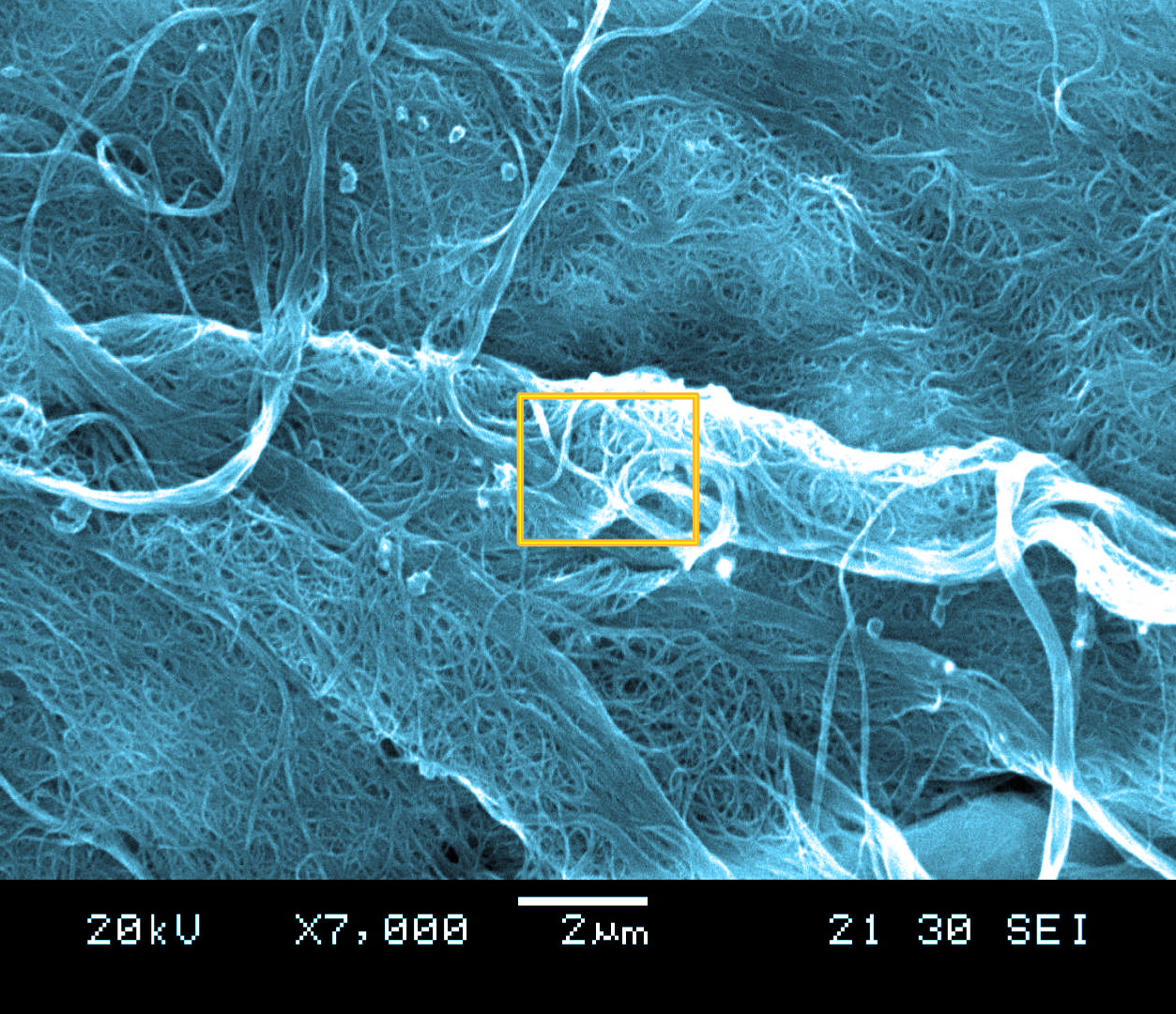
7k 배율은 코드가 어떻게 번들로 구성되는지 그 특성을 보여줍니다.
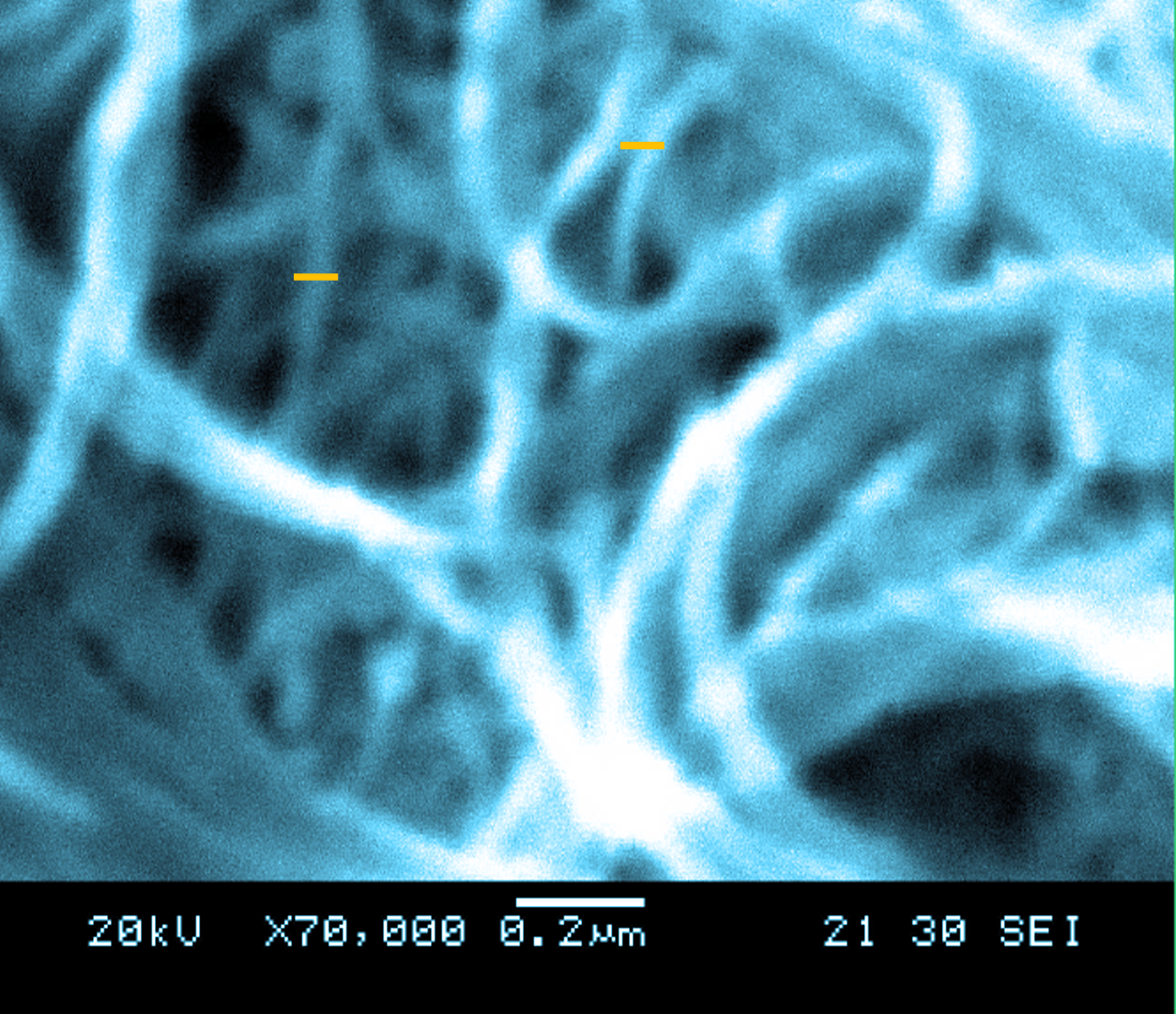
70k 배율은 코드의 스케일을 보여줍니다. 노란색 틱의 폭은 ~50nm입니다.
캐비테이션 - 언번들링 솔루션
캐비테이션 처리 파라미터를 제어함으로써 가로 세로 비율을 그대로 유지하면서 CNT를 효과적으로 언번들링할 수 있습니다. 발생하는 언번들링의 양을 제어하여 원하는 유변학적 특성뿐만 아니라 목표한 체적 저항과 시트 저항의 균형을 맞출 수 있습니다.
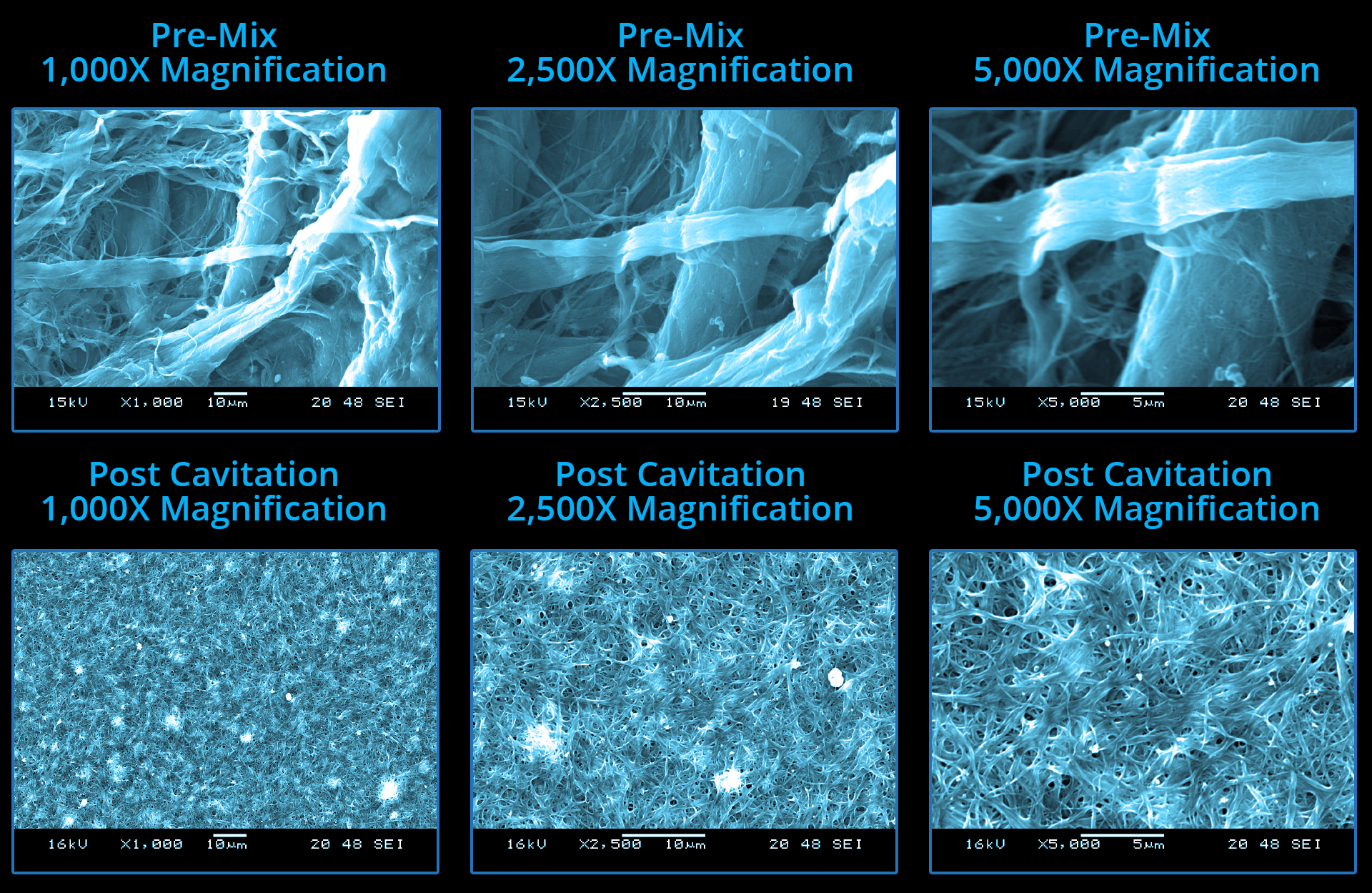
점도 및 부피 저항
Through ACI Material's precise control of cavitation processing parameters, it is able to effectively unbundle CNTs while keeping their aspect ratio intact. The process can control the amount of unbundling and dispersing that occurs, so that the outcome is an optimal balance of volume resistivity and desired rheological properties.